Table of Content
- Using Curry Leaf Herb
- How to Start Dragon Fruit Farming/Pitaya in Thailand: A Step-by-Step Guide for Beginners
- How to Grow Kumquat from Seeds and Cuttings: Check How this Guide Helps Beginners
- Contract Fish Farming in India: Companies, Agreement, Profits, Process, Benefits, and Risks
- Can you grow curry leaves in USA?
- Rose Flower Growing Tips and Tricks
This will help prevent the spread of disease or pests to other plants in your garden. In a year or two, the curry leaf plant will start producing pretty little flowers at the tip of the branch. If let it grown on the plant, these flowers will produce seeds later in the season. While the flowers mature and turn into fruits, the plant diverts most of the energy in nourishing these flowers.

This ultimate guide on how to grow curry leaf will help you to grow and care for curry leaf plant. Get to know best practices to make curry leaf plant bushier. To makecurry leavesgrow faster, pruning is necessary, this encourages multiple branches and gets more leaves for harvesting.
Using Curry Leaf Herb
Curry leaves are aromatic until they are fresh and therefore, lose their flavor when they get dry. So, did you know there is a season in which weight loss becomes easier? Well, yes, this is true, and moreover, that season is already here – winter. To know why winter is the best time for weight loss, watch the below video by Dietitian Mac. Consumption of curry leaves protects your brain as it increases the antioxidants in the body.

Make sure to keep the newly planted Curry leaf plant hydrated without over-watering it and in a shaded area for a few weeks. Do not fertilize the young plant for the first 6 months. Fertilizing the plant too soon can burn the roots and damage the plant permanently. To grow curry leaves bushy, pruning is necessary, this encourages multiple branches and gets more leaves for harvesting. Fertilizing is necessary every 3rd to 4th week to give enough nutrients to curry leaves plant.
How to Start Dragon Fruit Farming/Pitaya in Thailand: A Step-by-Step Guide for Beginners
If this happens, leaves will reemerge in the spring when temperatures increase. Reduce irrigation so the soil dries out to one inch deep in between waterings. Keep the potting mixture moist and mist the cuttings every day until the roots have become established.

Yes, curry plants need total sun exposure for most of the day. Curry plants are warm-season trees and take a very long time to grow. Full sunlight and partial shade are the best combinations to which a curry plant can be subjected. It is essential to prune a curry leaf plant in order to maintain the plant’s health and maintain its bushy appearance. You may stimulate fresh development and additional new leaves on the plant by doing some light pruning on it.
How to Grow Kumquat from Seeds and Cuttings: Check How this Guide Helps Beginners
Because it is the base of all of the coming processes. Make sure it is flexible and healthy enough to stand. The stem should have three to four sets of leaves as well. It should be the thickness of the pencil and at least 5 inches in height. Curry leaf care is quite straightforward and even suitable for a beginner.
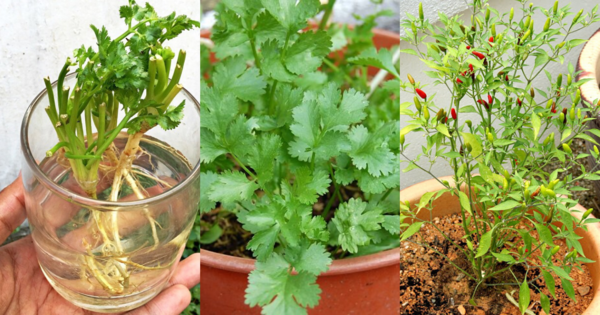
The curry leaf tree is a small bush or tree that only grows 13 to just under 20 feet (4 to just under 6 m.) in height. The plant is tropical to sub-tropical and produces small, fragrant, white flowers that become small, black, berry-like fruits. The fruit is edible, but the seed is poisonous and must be removed prior to use. The foliage is the real standout; it’s arranged alternately on the stem and pinnate and is comprised of many leaflets. The aromatic scent is spicy and heady and best when the leaves are fresh.
If the bark is dry and lacks moisture, the plant dies. If not, the plant is healthy and can continue to grow. The month of planting is decided based on the required climatic conditions for the curry plant to thrive and yield to its full potential. Either case demands quality soil rich in nutrients, preferably sandy loam soil.
For grafts, cut out a small branch or a twig, peel slightly at the bottom, dip it in rooting hormone powder and plant it inside the pot. “The curry plant is sensitive to extreme heat and may not attain a maximum growth during the period,” she adds. Kristine Lofgren is a writer, photographer, reader, and gardening lover from outside Portland, Oregon. She was raised in the Utah desert, and made her way to the rainforests of the Pacific Northwest with her husband and two dogs in 2018. Her passion is focused these days on growing ornamental edibles, and foraging for food in the urban and suburban landscape. The second method means cutting off branches every two months during the growing season.
Sienna Mae Heath is a gardening expert with over five years of experience in gardening and landscape design. Her work has been featured in The Weeder's Digest, Gardening Know How, GrowIt, and more. Spray with neem oil spray when you see Aphids on the plant. In cooler weather, the plant does not need much watering. Again, check to see if the plant is thirsty before watering. Move the pot back into full sun location where it receives 6 to 8 hours of direct sunlight.

The process of re-potting is done repetitively till the plant stops growing, and it is then that the curry plant starts to yield. The primary reason for this is the length of the curry plant roots is considerable and cannot be contained in a small pot, thereby needing re-potting. Curry plants grow best in dry soils which do not retain water for longer durations. While growing curry plants in open locations, one has to ensure that the wind flow is not too hard, or the plant may not yield as much as expected. Curry plants grow best when planted during Spring, which is usually during February in India and November in the US. This is due to the growth duration of the curry plant.
If you live in an area with climate zones 9-12 or the temperature doesn’t fall below 32 °F (0 °C), you can put your curry leaf plant directly in the ground. Make sure to amend the soil so it has the proper nutrients. The tree should be grown in rich, well-drained soil in full sunlight or partial shade. If it is grown outdoor, it should be located in an area that does not receive a lot of wind. It is a good idea to fertilize your plant every two weeks with a balanced fertilizer, such as Miracle-Gro, or a high-nitrogen/low-phosphorus fertilizer. You can also add a small amount of compost to the soil to help prevent root rot.
Things to consider while you repotting the curry leaves plant. Don’t give strong fertilizer to young curry plants. If you are applying fertilizer for the pot, apply at the rim of the pot.
Watering the Curry Leaf Plant:
You also should not give a bright light to the plant, this may shock the plant. How to overcome the low-temperature problem in Curry plants. If you cannot give enough sunlight you can give artificial light as an alternative. This will surely help the germinated small plant to grow well. You have to insert the pencil into the soil reaching up to 1 inch above the base level. In addition to being used as a spice, curry leaves are also used medicinally.
Curry leaf plants may be grown from cuttings or seed. The seed is the pit of the fruit and can either be cleaned or the entire fruit may be sown. Sow the seeds in potting soil and keep them damp but not wet.




No comments:
Post a Comment